

When you buy a car—especially in Dubai—it’s easy to focus on the excitement of driving and forget about what happens after the purchase. However, the real cost of owning a car isn’t just the price you pay upfront—it’s the maintenance, servicing, and repairs that come over the years. That’s where car service contracts and extended warranties come into play. Both promise peace of mind, but they cover different needs, work differently, and appeal to different types of drivers.
In Dubai’s climate—where sand, heat, and high mileage are everyday realities—understanding these two options is essential. Choosing the wrong one can lead to wasted money, unexpected breakdowns, or even the invalidation of your manufacturer’s warranty. On the other hand, choosing the right one can save you thousands of dirhams and years of stress.
In this detailed guide, we’ll explore every aspect of car service contracts vs. extended warranties, from what they cover and how they differ, to which one is right for your vehicle, driving habits, and budget. By the end, you’ll have a clear understanding of how each works—and which choice is better for your needs in Dubai.
If you want a broader overview of car maintenance types, including how major and minor services fit into your car’s lifecycle, you can read our Complete Guide to Car Service Contracts, Major & Minor Services in Dubai. That blog provides the foundation on how all these maintenance elements work together.
Car Service Contracts and Extended Warranties Explained
Before you can decide which is better, it’s important to understand what each one actually is. Though they’re often marketed in similar ways, car service contracts and extended warranties serve very different functions.
What Is a Car Service Contract?
A car service contract, sometimes called a maintenance plan or annual service plan, is an agreement between you and a service provider (like Auto Whiz) to perform all the regular maintenance your car needs for a fixed period—usually one year or a specific mileage limit.
These contracts cover scheduled minor and major services, ensuring your car gets oil changes, filter replacements, brake inspections, fluid top-ups, and system checks exactly when needed. In Dubai, where harsh weather accelerates wear, a structured plan ensures your car remains reliable, fuel-efficient, and safe throughout the year.
What makes service contracts particularly appealing is the predictable cost. Instead of paying for each service separately, you pay a fixed package price that includes everything your vehicle requires within that period. You also avoid hidden costs or inflated labor fees that pop up when visiting random garages.
You can learn more about their structure and advantages in our supporting article on 5 Benefits of Signing an Annual Car Service Contract in Dubai, which explains how regular maintenance through contracts saves both time and money.
What Is an Extended Warranty?
An extended warranty, on the other hand, is a policy—usually offered by the car manufacturer, dealership, or a third-party provider—that covers repairs for mechanical and electrical failures after your manufacturer’s warranty expires.
While a service contract covers preventive maintenance, an extended warranty steps in after something breaks. It’s a safety net against major repair bills for expensive parts like the engine, gearbox, transmission, or air conditioning compressor.
Extended warranties can range from basic powertrain coverage (engine and transmission only) to comprehensive coverage that includes nearly all components except wear-and-tear items. The goal is to minimize out-of-pocket costs when something goes wrong unexpectedly.
In Dubai, where extreme temperatures and traffic congestion can accelerate mechanical wear, extended warranties can be lifesavers—if chosen wisely.
The Core Difference: Maintenance vs. Repair
The simplest way to understand the difference between a car service contract and an extended warranty is this:
-
A service contract focuses on preventing problems.
-
An extended warranty focuses on fixing problems.
A service contract ensures your car stays healthy through regular maintenance like oil changes, inspections, and tune-ups. It’s proactive. An extended warranty steps in when something goes wrong—when a part fails, a system malfunctions, or a repair becomes too expensive. It’s reactive.
In other words, service contracts maintain your car’s health, while warranties protect your wallet when mechanical failure occurs. Ideally, they should work together. A well-serviced car is less likely to need warranty repairs, and a warranty ensures those rare failures don’t cost you a fortune.
Why Dubai’s Driving Conditions Make This Decision Crucial
Choosing between a service contract and an extended warranty isn’t just a financial question—it’s a climate-based one too. Dubai’s environmental and driving conditions are some of the harshest for vehicles anywhere in the world.
Here’s why that matters:
-
High temperatures: The heat in Dubai shortens battery life, thickens oil faster, and causes rubber seals, belts, and hoses to deteriorate prematurely.
-
Dust and sand: Constant exposure to dust means air filters and cabin filters clog faster, requiring more frequent replacement.
-
Traffic congestion: Heavy traffic means cars spend long periods idling, increasing engine heat and fuel consumption.
-
Luxury cars: Many Dubai drivers own German and European cars, which have higher maintenance requirements and more expensive repair parts.
Because of these conditions, preventive maintenance (via service contracts) becomes almost as critical as repair coverage (via warranties). Without regular upkeep, even a car with a valid warranty could experience failures not covered under the policy—because neglecting maintenance voids warranty claims.
So, in the context of Dubai, the question isn’t whether to get one or the other—it’s how to balance both effectively.
What Car Service Contracts Typically Cover
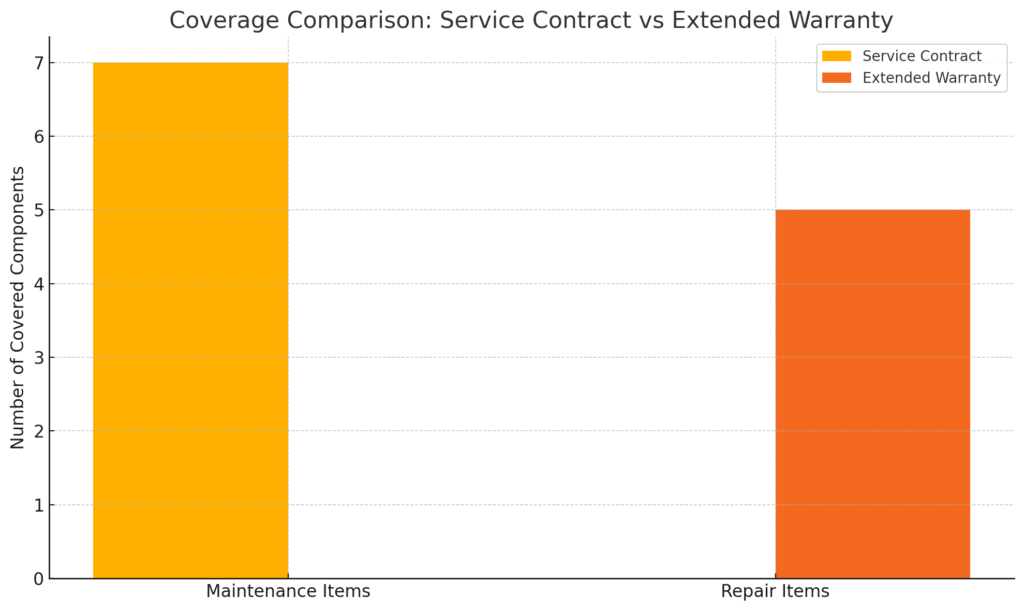
A quality car service contract, such as those offered by Auto Whiz, usually covers all scheduled services recommended by your vehicle manufacturer. This can include:
-
Engine oil and filter changes
-
Air, fuel, and cabin filter replacements
-
Brake inspection and cleaning
-
Transmission and coolant fluid checks
-
Spark plug replacements
-
Tire rotation and alignment inspection
-
Battery health check
-
AC performance test
-
Full vehicle diagnostic scan
Depending on the plan, some contracts may also include labor costs, pickup and drop-off services, and even discounts on spare parts or non-routine repairs.
The key here is consistency. Every 10,000 km or six months (whichever comes first), your car receives the care it needs. Over a year, this structured approach saves you from large repair bills and keeps your car performing like new.
For example, if you own a German car like a Mercedes or BMW in Dubai, missing even one service can drastically affect its long-term reliability. A structured annual service contract eliminates that risk.
What Extended Warranties Typically Cover
An extended warranty covers repairs or replacements of parts that fail due to mechanical or electrical faults. This may include:
-
Engine components (pistons, crankshaft, valves)
-
Transmission (gearbox, torque converter)
-
Drivetrain and differential
-
Air conditioning system
-
Steering and suspension systems
-
Electrical systems (ECU, alternator, sensors)
However, it’s important to note what extended warranties don’t cover:
-
Wear-and-tear items (brake pads, tires, clutch discs)
-
Fluids and filters
-
Regular maintenance
-
Cosmetic damages or paint issues
In simple terms, warranties are for breakdowns, not for upkeep. They’re designed to protect against unexpected failures, not the predictable maintenance all cars require.
The Cost Comparison: Which One Saves More Money?
When comparing costs, car owners often make a mistake—they look only at upfront prices, not the total ownership cost.
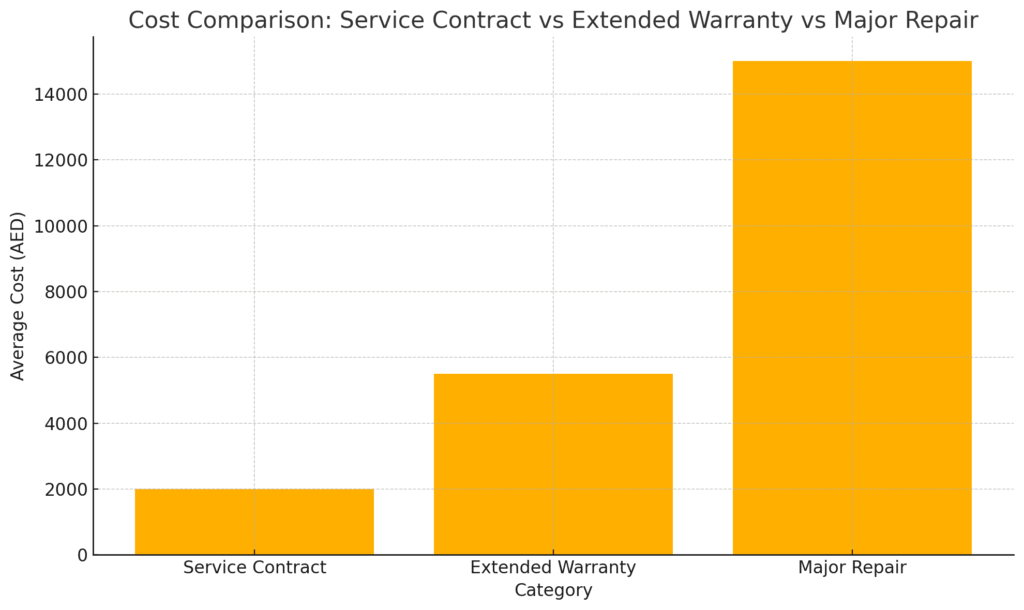
An annual car service contract typically costs between AED 1,000 and AED 3,000 depending on the vehicle type and coverage. In return, you receive two or more full services per year, covering oil, filters, fluids, and inspections. Over time, this structure reduces major repair risks and keeps your car’s efficiency high.
An extended warranty, especially for luxury or European cars, can cost anywhere between AED 3,000 and AED 8,000 for a 1–2 year term, depending on coverage. It’s a larger investment upfront but offers peace of mind for big repairs that can easily cost tens of thousands of dirhams.
So which one saves more money?
-
If you plan to keep the car long-term, a service contract saves more because it minimizes wear and prevents expensive failures.
-
If you own an older or out-of-warranty vehicle, an extended warranty might save you from sudden major repair bills.
-
The best strategy in Dubai is combining both—a service contract for ongoing care, and an extended warranty for catastrophic protection.
Which Is More Suitable for New Cars?
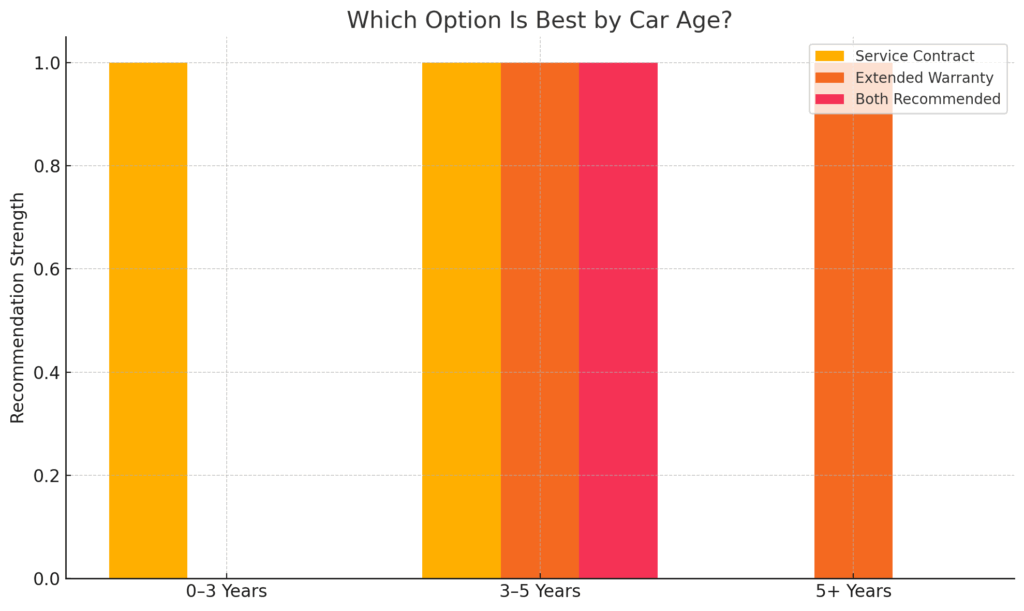
For new cars, especially those still under the manufacturer’s warranty, the smart move is to invest in a car service contract rather than an extended warranty.
Here’s why: new cars are unlikely to experience major mechanical failures during the first few years, so the warranty extension isn’t immediately necessary. However, they do require regular servicing to stay within manufacturer specifications and retain their warranty coverage. Missing scheduled maintenance can void even the factory warranty, which defeats the purpose of having one.
With a service contract in place, you ensure your new car remains in pristine condition, warranty-compliant, and ready for resale with a perfect service record.
Which Is Better for Older Cars?
For older cars, especially those whose factory warranty has expired, an extended warranty becomes more valuable. Once a vehicle has covered over 100,000 km, the chances of major component failure increase dramatically.
However, even then, it’s a mistake to rely solely on a warranty. An extended warranty won’t cover failures caused by poor maintenance, so pairing it with a short-term service contract still makes sense. The combination ensures both prevention and protection.
The Role of Professional Workshops in Maximizing Both
Not all garages in Dubai are equal, and this factor can make or break the value of your contract or warranty. Many warranties specify that only authorized workshops can perform repairs, while service contracts rely on workshops with skilled technicians who follow manufacturer standards.
Auto Whiz, for example, provides both annual contracts and specialized maintenance for luxury and everyday vehicles alike. Their technicians are trained to handle European, Japanese, and American cars with precision, ensuring your car remains compliant with manufacturer guidelines—an essential requirement to keep your extended warranty valid.
In Dubai, choosing a trustworthy, transparent service center like Auto Whiz ensures that both your service contract and warranty work together instead of conflicting.
Which One Should You Choose?
Here’s a quick summary:
| Scenario | Recommended Option |
|---|---|
| New car still under manufacturer’s warranty | Car Service Contract |
| Car older than 3 years with high mileage | Extended Warranty + Service Contract |
| Driver wants predictable yearly costs | Car Service Contract |
| Driver wants repair coverage for engine or transmission failures | Extended Warranty |
| Car owner plans to sell soon | Service Contract (for resale value) |
Ultimately, your decision depends on how long you plan to keep the car, how much you drive, and what risks you want to avoid. If you value preventive maintenance, choose a car service contract. If you want repair coverage after warranty expiry, choose an extended warranty. If you want complete peace of mind—get both.
Common Mistakes Car Owners Make
Many car owners in Dubai misunderstand how warranties and contracts work, leading to expensive outcomes. Here are the top mistakes to avoid:
-
Assuming warranties cover maintenance. They don’t—oil changes and filters are always excluded.
-
Skipping scheduled services. Missing even one can void your warranty claim.
-
Using unauthorized garages. Some workshops don’t follow manufacturer standards, invalidating coverage.
-
Overlapping contracts and warranties unnecessarily. Plan them sequentially—contracts during warranty, extended warranties after.
-
Not reading exclusions. Always check what is not covered before signing any agreement.
Avoiding these pitfalls ensures you get full value from whichever plan you choose.
The Smartest Approach: Combine Prevention and Protection
For most Dubai drivers, the smartest approach is not choosing one or the other, but combining both intelligently.
Here’s the strategy:
-
Use a car service contract during the first few years of ownership to maintain the vehicle and preserve manufacturer warranty coverage.
-
Once the manufacturer’s warranty expires, transition into an extended warranty for repair protection, while maintaining a lighter service contract to handle maintenance.
This way, you stay fully covered throughout your car’s lifespan—from preventive care to repair protection.
Final Thoughts
When it comes to car service contracts vs. extended warranties, there’s no one-size-fits-all answer. The best choice depends on your vehicle’s age, mileage, and usage habits. But in Dubai’s demanding climate, both play critical roles. A car service contract ensures consistent care and long-term savings, while an extended warranty shields you from unexpected repair bills.
If you’re looking for an expert opinion or need help choosing the right combination for your vehicle, Auto Whiz Garage in Dubai offers transparent advice and flexible options designed around your car’s specific needs.