

Dubai has always had a soft spot for German cars. BMW, Mercedes-Benz, Audi, Volkswagen, and Porsche are everywhere on Sheikh Zayed Road, and for good reason. They’re well-built, refined, and hold their prestige even after a few years on the road. So it’s no surprise that the used German car market in Dubai is booming.
But here’s the thing — buying a used German car without proper inspection can turn into an expensive mistake. These vehicles have complex engineering, and problems that seem minor on the surface can cost serious money to fix. If you’re looking at a used German car in Dubai right now, this guide is for you. We’ll walk through everything you need to check before signing anything.
Why Buying a Used German Car Requires Extra Attention
German cars are built with advanced technology. That’s part of what makes them great to drive. But it also means more sensors, more software, more specialized parts — and more things that can go wrong.
In Dubai specifically, the heat, dust, and stop-and-go traffic put extra stress on components. A car that looks clean and drives fine for 10 minutes might have issues that only show up on a diagnostic scan or after a proper inspection. That’s why skipping due diligence on a used German car is a risk most buyers regret.
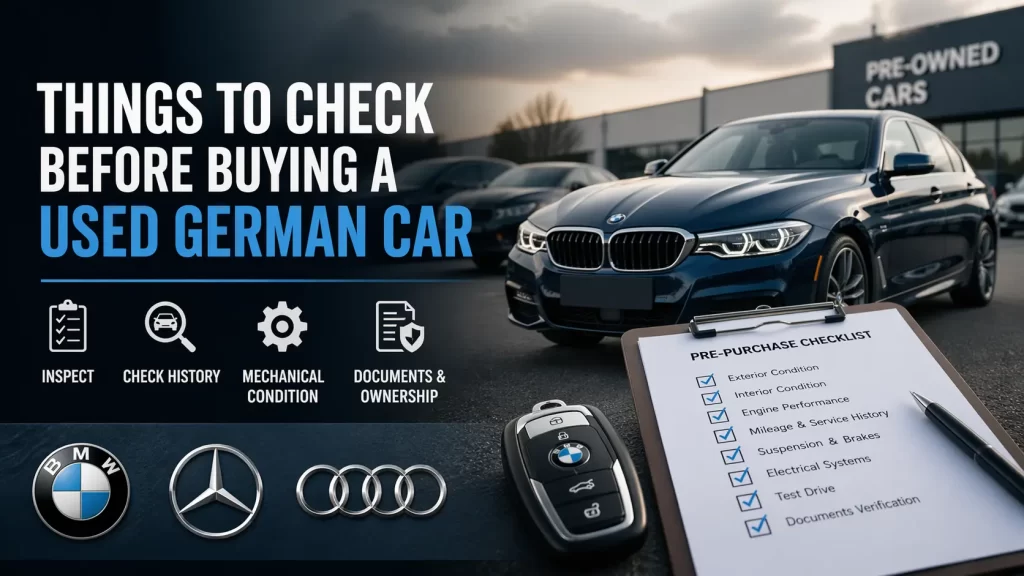
Complete Checklist Before Buying a Used German Car
Engine Condition
Start under the hood. Look for oil leaks around the valve cover, oil pan, and coolant hoses. A bit of dust is normal in Dubai — oil stains are not. Check if the engine runs smoothly at idle. Any ticking, knocking, or rough idle is a warning sign.
Ask the seller when the last oil change was done and whether the coolant has been flushed recently. Overheating is a common issue with used German cars in the UAE, especially if maintenance was inconsistent.
Transmission Performance
Take the car for a test drive and pay attention to gear shifts. Whether it’s an automatic or a DSG (dual-clutch), shifts should be smooth and predictable. Jerking, hesitation, or slipping gears usually means the transmission needs attention — and that’s not a cheap fix.
For automatics, check the transmission fluid if possible. Dark, burnt-smelling fluid often means the transmission has been running hot or overdue for service.
Suspension and Steering
German cars are known for sharp handling, so if something feels vague or bumpy, take note. Drive over a speed bump slowly and listen for clunks or creaks. Check if the car pulls to one side during braking or acceleration. These can indicate worn suspension bushings, damaged control arms, or alignment issues.
Air suspension, which is common on models like the BMW 5 Series and Mercedes E-Class, can be particularly expensive to repair if worn.
Electrical Systems and Warning Lights
This is one of the most important checks for any used German car. Plug in an OBD-II scanner and check for stored fault codes — even if no warning lights are currently on. Many sellers clear fault codes before showing a car. A professional diagnostic scan will reveal what’s actually going on.
Check that all electronics work: windows, sunroof, air conditioning controls, infotainment, parking sensors, and ambient lighting if applicable. Electrical repairs on German cars are not cheap.
AC System Performance
In Dubai, the AC isn’t optional — it’s essential. Run the AC on full blast and check how quickly the cabin cools down. The compressor should engage without unusual noise. Weak cooling could mean a refrigerant leak or a failing compressor. Both can be costly.
Brake System Condition
Ask about the age of the brake pads and rotors. German cars — especially BMWs — tend to go through brake components faster than Japanese cars. Check for brake dust on the wheels and listen for grinding or squealing during the test drive. Soft or spongy brake pedal feel suggests the brake fluid needs replacing or there’s a more serious issue.
Service History and Maintenance Records
Always ask for the full service history. A car without records is a gamble. Ideally, you want to see that oil changes, spark plugs, filters, and other scheduled maintenance were done on time at a reputable workshop.
If the car was serviced at an authorized dealer for most of its life, that’s a good sign. But it’s not the only sign — what matters is that maintenance was done regularly and documented.
Mileage vs Actual Wear
Mileage alone doesn’t tell the whole story. A 60,000 km car that sat in traffic most of its life can be more worn than one that was driven mostly on highways. Look at the wear on the driver’s seat, steering wheel, and pedals — they should match the mileage reading. Heavily worn interiors on a “low mileage” car are a red flag.
Also, check that the odometer reading is consistent with the service records.
Accident History and Body Condition
Run a Carfax or similar vehicle history report if available. Walk around the car in daylight and look for mismatched paint, uneven panel gaps, or overspray near the rubber seals. These signs point to previous accident repairs. A car with a properly repaired accident history is not necessarily a dealbreaker — but you need to know about it so you can factor it into the price.
Check the trunk and under the floor mat for signs of rust or water damage. This is rare in Dubai but not impossible.
Diagnostic Scan
Don’t skip this step. A full diagnostic scan reads fault codes from every module — engine, transmission, ABS, airbags, and more. This is the single most reliable way to find hidden problems on a used German car. Any reputable mechanic should be able to do this before you purchase.
Dubai-Specific Factors to Consider
The UAE climate is tough on cars. Here’s what to watch for specifically in Dubai:
Heat damage — Extreme heat degrades rubber seals, hoses, and plastic components faster than in cooler climates. Check all rubber hoses under the hood and look for cracking.
Sand and dust — Air filters, cabin filters, and even the AC evaporator can get clogged with fine desert dust. Ask when these were last replaced.
Traffic wear — Dubai traffic means a lot of low-speed, high-frequency braking and gear changes. Brake systems, clutches, and transmissions wear faster in these conditions.
Hidden Costs Buyers Often Miss
Used German cars can be affordable to buy upfront, but running costs catch many buyers off guard. Genuine parts are more expensive than those for Japanese cars. Labour charges at specialized workshops add up. And some repairs — like a timing chain replacement or air suspension overhaul — can cost thousands of dirhams.
Before you commit to a purchase, do your research on the cost of maintaining German cars in Dubai. Knowing what you’re getting into helps you negotiate a fair price and budget properly.
Why Professional Inspection Is Important
A casual test drive and a visual check are not enough for a used German car. You need someone who knows these vehicles well — someone who can spot worn engine mounts, identify early signs of transmission wear, and run a proper diagnostic.
Getting a pre-purchase inspection done by a trusted German car mechanic in Al Quoz before you buy can save you from a car that needs AED 10,000 in repairs the week after purchase. It’s a small cost for a lot of peace of mind.
Common Mistakes When Buying Used German Cars
Skipping the inspection — Many buyers trust the seller’s word or rely on a short test drive. This is how most regrets happen. Always get a proper inspection.
Ignoring warning lights — If the seller says “it’s nothing, just a sensor” — get it checked anyway. Warning lights on German cars rarely mean nothing.
Choosing the cheapest option — A very low price on a used German car almost always means something is wrong. If a deal looks too good, dig deeper before getting excited.
Understanding Why Expertise Matters
Not every mechanic in Dubai is familiar with the specific quirks of German car engineering. BMW’s N-series engines, Mercedes’ 7G-Tronic gearboxes, and Audi’s quattro systems all require a different level of knowledge and tooling to inspect and repair correctly.
If you want to understand why this matters in the long run, read about why German cars require specialized mechanics in Dubai. It helps explain why the choice of mechanic — both for inspection and future maintenance — is something worth thinking about before you buy.
Tips to Buy a Reliable Used German Car in Dubai
- Always inspect in daylight — lighting hides a lot.
- Bring a trusted mechanic with you or book a pre-purchase inspection at a workshop.
- Test all electronics during the test drive, not just after.
- Ask for the full service history and verify the records.
- Run a vehicle history check to confirm no major accidents.
- Check the actual condition of the tyres — they wear faster in Dubai’s heat.
- Negotiate based on any issues found during inspection.
- Budget for maintenance from day one, not just the purchase price.
FAQs
What should I check before buying a used German car? Check the engine, transmission, suspension, brakes, electrical systems, AC, and body condition. A full diagnostic scan is essential. Always review the service history and get a pre-purchase inspection from a qualified mechanic.
Are used German cars reliable in Dubai? They can be, if they’ve been maintained properly. German cars are well-engineered but require regular servicing. A well-maintained BMW or Mercedes with documented history can be a solid buy. One that’s been neglected will cost you.
Is maintenance expensive for used German cars? It’s generally higher than Japanese cars. Parts cost more, and some repairs require specialized knowledge. That said, if you stay on top of routine maintenance, you can avoid the major expenses.
How important is service history? Very important. It tells you how the car was looked after. Missing records don’t always mean bad maintenance, but they remove your ability to verify it. Always prefer a car with full, documented history.
Should I get a pre-purchase inspection? Yes, always. A professional inspection can uncover issues that aren’t visible during a test drive. It’s one of the best investments you can make before buying any used car — especially a German one.
Which German cars are most reliable in UAE? Generally, the Mercedes C-Class and E-Class (petrol variants), BMW 3 Series, and Volkswagen Passat have good reliability track records in the UAE when properly maintained. Avoid high-mileage examples of any model with known engine or gearbox issues.
Conclusion
Buying a used German car in Dubai is a smart move — if you do it right. These cars offer a lot for the money, but they reward buyers who take the time to check everything properly. Know what to look for, get a professional inspection, understand the running costs, and don’t rush the decision.
A little patience before purchase can save you a lot of money — and stress — down the road.